A dog’s toy can become more than something to fetch. Giant Plush Toys For Dogs attract attention because their oversized shape invites wrestling, carrying, and cozy contact. A large plush bear sprawled across the living-room rug gives a dog something substantial to grab. For some dogs, that feels more rewarding than a small squeaky toy. For others, it is simply too much.
Animal writer and advocate Roger Caras once said, “Dogs are not our whole life, but they make our lives whole.” That bond helps explain why owners choose toys that look playful, feel soft, and photograph well beside a beloved pet. Still, popularity does not prove that every dog enjoys oversized plush toys. Temperament matters. So does play style.
A gentle dog may carry a giant toy from room to room. A determined chewer may pull at its seams within minutes. Watch closely. Choose a toy large enough to discourage swallowing, but not so bulky that your dog struggles to move it. Check stitching, fabric, and any exposed filling regularly. Even a well-made toy can wear down.
There is a catch. Plush toys need supervision, and some dogs quickly turn cuddly play into rough disassembly. This guide explores the appeal, practical benefits, safety considerations, and buying details behind these popular toys. It also asks a less convenient question: does the dog love the giant toy, or do we love the picture?
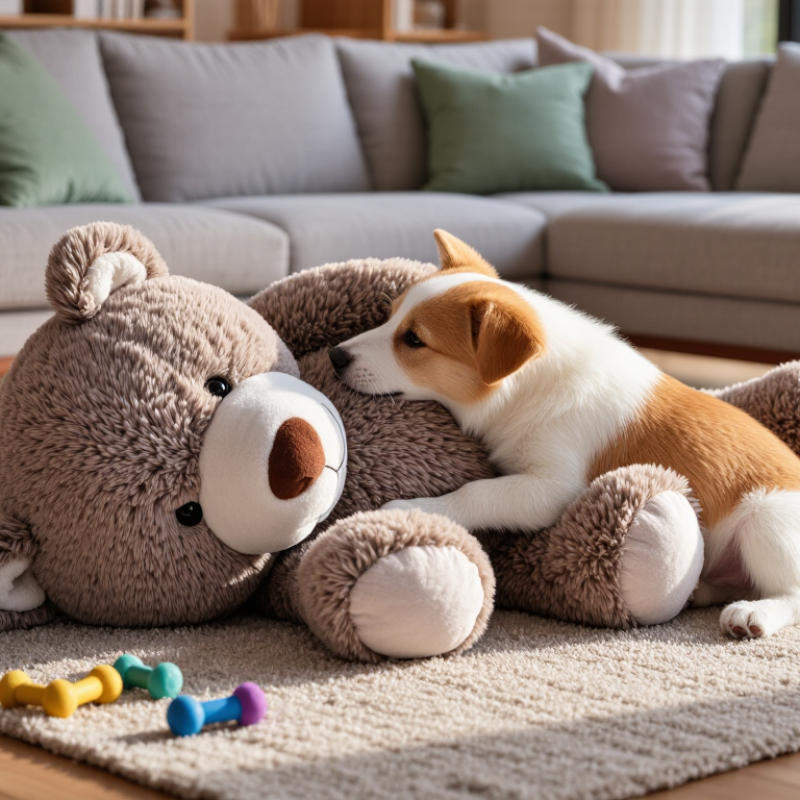
What Qualifies as a Giant Plush Toy for Dogs? Size, Materials, and Design
A giant plush toy for a dog has no universal size standard. “Giant” is relative to the dog: a toy should look substantial beside the animal, but remain easy to carry and reposition. Check its length, width, and weight, not just the label. A large, floppy toy may suit a retriever, while a smaller dog can struggle with the same bulk. And “giant” is fuzzy.
Materials and construction matter as much as dimensions. Look for tightly sewn seams, securely attached parts, and fabric that matches your dog’s chewing habits. Plush toys are not indestructible; stuffing and squeakers can become hazards if the toy tears. The American Pet Products Association reported U.S. pet-industry spending of $152 billion in 2024. That figure reflects the wider market, not a specific standard for plush-toy size or safety. A clear product description should state measurements and materials, rather than relying on dramatic photos.
Tips: Compare the toy with your dog’s chest and muzzle. Inspect seams before play, and remove the toy if fabric splits or stuffing shows. Supervise early play. A giant toy can be comforting, but bigger is not automatically better.
Why Are Giant Plush Toys for Dogs So Popular?
What qualifies as a giant plush toy? Size is a useful starting point—but materials and design matter, too.
How to read this guide: The bars show example length guideposts, not an official industry standard; there is no universal cutoff for “giant.” Plush toys are commonly made with soft textile shells and stuffing. For a giant toy, check that its seams and construction suit your dog’s play style, and supervise play—especially if your dog tends to chew or tear toys.
How Plush Toys Support Play, Comfort, and Dogs’ Chewing Instincts
Giant plush toys make play feel physical: a dog can grip a floppy limb, shake the toy, or carry it from room to room. Their soft surfaces may also offer a familiar resting spot. Some dogs cuddle them; others immediately attack the seams. Individual temperament matters.
Chewing is normal, but plush toys provide little resistance compared with purpose-made chew items. They can encourage gentle mouthing and interactive play, not replace exercise or dental care. The American Pet Products Association’s 2024 State of the Industry report estimated U.S. pet spending at $147 billion in 2023. That shows a large pet-care market, but the report does not isolate plush-toy sales or prove oversized toys are safer. A giant toy can still become a choking risk if its stuffing or parts come loose.
Tips: Choose a toy too large to swallow, inspect seams often, and supervise vigorous chewers. Remove it when torn. If your dog guards toys or eats fabric, ask a veterinarian or qualified behavior professional for guidance. Soft does not mean indestructible.
Why 65.1 Million U.S. Dog-Owning Households Matter (APPA, 2023–24)
The American Pet Products Association reported 65.1 million U.S. dog-owning households in 2023–24. That figure helps explain why giant plush toys attract attention: even a niche plaything can reach a large audience. But it does not mean every household wants one. Dogs differ in size, play style, and tolerance for bulky toys.
For some dogs, a large plush toy offers a satisfying object to carry, lean against, or shake. Picture a retriever padding across the living room with a toy nearly as long as its body. The toy can also become a familiar comfort object, though that depends on the individual dog. Size alone is not enrichment. A toy should suit the dog’s mouth and strength, and owners should check seams and stuffing during play.
That distinction matters. The household statistic describes potential reach, not proven demand for giant toys. It is tempting to treat a big number as a simple sales explanation, but real preferences are messier. Some dogs gently cuddle plush toys; others tear them apart quickly. Supervised play and regular inspection can help owners decide whether a large plush toy is practical for their dog.
How Giant Plush Toys Fit a $147B U.S. Pet Market (APPA, 2023)
Why Are Giant Plush Toys for Dogs So Popular?
The American Pet Products Association reported $147 billion in U.S. pet industry spending for 2023. That figure covers a broad market, including food, veterinary care, supplies, and services. Giant plush toys occupy only a small corner of it. Their popularity reflects how owners often choose products for companionship and play, not just basic needs.
A large toy can become a soft object to carry from room to room, lean against, or toss across the living room. For some dogs, its size makes play more engaging. For others, it is simply a bed-side cushion. Not every dog wants one. A strong chewer may tear seams quickly, while a cautious dog may ignore the toy altogether. Check stitching and loose parts, and supervise play if the toy starts coming apart.
The market figure can make every pet product seem like a proven growth opportunity. It isn’t. APPA’s total spending figure does not tell us how much owners spend on oversized plush toys specifically. That distinction matters. A toy’s appeal may depend on a dog’s habits, the space available at home, and whether the owner is comfortable replacing it when worn. Plush can be inviting, but durability varies.
Safety, Durability, and Supervision: Choosing the Right Oversized Toy
Giant plush toys appeal to dogs because they offer something soft to carry, cuddle, or wrestle. Their size can make play feel engaging, especially for dogs that enjoy shaking or dragging a toy across the floor. But bigger does not automatically mean safer. A toy that is awkward to lift may frustrate a small dog, while a determined chewer can open seams surprisingly quickly.
Choose a toy your dog can carry without straining, and check that loose parts cannot be easily swallowed. Strong stitching helps, but no plush toy is indestructible. Run your fingers along the seams and inspect the fabric after play. If stuffing or a squeaker becomes exposed, put the toy away. I once assumed a thick outer fabric meant longer-lasting play; the weak seam proved otherwise. Supervision matters, particularly during the first few sessions, when you can learn how your dog uses the toy.
Tips: Match the toy to your dog’s size and play style. Watch for chewing, not just cuddling. Stop play if the toy tears, and wash it according to its care instructions. Don’t leave a damaged toy within reach.
Conclusion
Giant Plush Toys For Dogs are oversized soft toys designed to offer more than a simple plaything. Their size, fabric, filling, and construction can influence how a dog interacts with them, whether by carrying, cuddling, tossing, or chewing. Plush toys may encourage play, provide a comforting object during quiet moments, and give dogs an appropriate outlet for natural chewing instincts. Because dogs differ in size, age, and play style, the right toy should suit the individual dog rather than simply be the largest available.
Their popularity also reflects the scale of the U.S. pet community and its spending: APPA reported 65.1 million U.S. dog-owning households in 2023–24 and a $147 billion U.S. pet market in 2023. When choosing an oversized toy, owners should consider stitching, materials, and whether the toy can withstand their dog’s play. No plush toy is indestructible, so regular checks and supervision are important, especially for enthusiastic chewers.

 D King