Choosing a reliable source for Heavy Duty Chew Toys For Dogs takes more than comparing product photos. Buyers need to examine materials, construction, and the supplier’s ability to provide consistent specifications. A thick rubber toy may look durable, yet weak seams or an unsuitable shape can still create problems. Details matter.
This guide introduces ten China-based suppliers serving the heavy-duty dog chew toy market. It offers a practical starting point, not a guarantee that every product suits every dog. Ask for current product specifications, material information, and clear images of seams, edges, and finished surfaces. If possible, request samples and assess them under your own quality-control process. One sample is useful, but it cannot prove consistency across a large order.
Supplier evaluation should also include production capacity, communication, customization options, packaging, and documented quality procedures. Confirm what testing has been performed and which claims the supplier can support with records. Avoid relying on broad promises such as “indestructible.” No chew toy lasts forever, especially with powerful chewers. Dogs also differ in size, jaw strength, and play habits, so product selection requires care and supervision.
The comparisons ahead can help buyers frame better questions and shortlist potential partners. Still, supplier information and product ranges can change. Verify details directly before making purchasing decisions. A careful review takes time, sometimes more than expected.
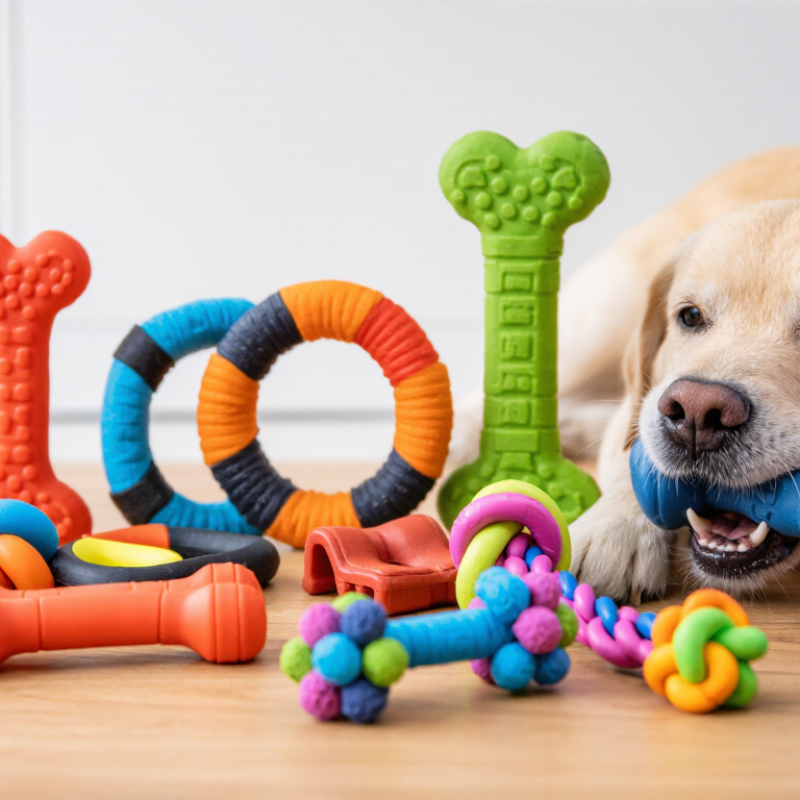
Heavy-duty chew toys are designed for dogs that quickly damage ordinary toys. Their value depends on more than thickness. Material quality, construction, and shape all affect how a toy performs during daily chewing. Dense rubber may offer flexibility, while reinforced fabric can suit supervised tugging. A hard surface is not automatically safer or more durable.
Check the toy’s seams, edges, and connection points. These are common weak spots. A practical test is to press the material and inspect whether it cracks, flakes, or leaves sharp edges. Size matters, too: a toy should be large enough that a dog cannot swallow it whole. Still, no chew toy is indestructible. Replace it when pieces loosen or deep splits appear.
Good suppliers should provide clear material descriptions, size measurements, care instructions, and realistic durability guidance. Ask how products are tested and whether inspection records are available. These details help buyers compare options beyond polished product photos. One detail is easy to overlook: dogs chew differently. A toy that lasts for one dog may fail quickly for another, so supervision and regular checks remain part of responsible use.
Compare common heavy-duty chew toy types by material, design, use, and safety considerations. These are product categories, not a ranking of named suppliers. Durability varies by design, manufacturing quality, and the individual dog.
| No. | Chew Toy Type | Common Material | Key Features | Typical Use | Safety Considerations |
|---|---|---|---|---|---|
| 1 | Solid rubber chew toy | Natural or synthetic rubber | Resilient, often designed to flex under chewing; some models can hold treats. | Supervised chewing and food enrichment. | Choose an appropriate size and inspect for tears or missing pieces. |
| 2 | Rubber ring or tug toy | Flexible rubber compound | Ring shape provides a grip for interactive play and chewing. | Tug games and supervised chew sessions. | Use tug toys interactively; remove the toy if it becomes damaged. |
| 3 | Nylon chew bone | Molded nylon | Rigid shape with textured surfaces; commonly offered in multiple sizes. | Chewing by dogs that prefer firm toys. | Very hard toys may damage teeth. Avoid products that cannot be indented with a fingernail; supervise use. |
| 4 | Thermoplastic elastomer (TPE) chew toy | TPE blend | Rubbery feel and molded textures; flexibility depends on the formulation and shape. | Chewing and light interactive play. | Check for punctures, cracks, or pieces that can be bitten off and swallowed. |
| 5 | Multi-layer rubber toy | Rubber with varied thickness or molded layers | Layered geometry can combine flexible and thicker sections. | Chewing and, where designed for it, treat filling. | Layering does not guarantee indestructibility; inspect seams and thin areas. |
| 6 | Rope-and-rubber combination toy | Woven cotton or synthetic rope with rubber components | Combines a graspable rope section with a chewable molded part. | Supervised tugging and play. | Loose or swallowed rope fibers can pose a hazard; remove frayed toys promptly. |
| 7 | Treat-dispensing chew toy | Usually rubber or another resilient polymer | Hollow or ported design releases food as the dog manipulates it. | Food enrichment and supervised activity. | Use suitably sized food pieces and clean the toy according to its care instructions. |
| 8 | Textured dental-style chew toy | Rubber or flexible polymer | Ridges or grooves add surface texture during chewing. | Chewing enrichment; not a substitute for tooth brushing or veterinary dental care. | Select a size that cannot be swallowed and check textured areas for damage. |
| 9 | Freezable rubber chew toy | Freezer-suitable rubber, as specified by the manufacturer | Can be chilled or frozen when the product instructions permit. | Short, supervised chewing sessions. | Follow the product's temperature guidance; do not freeze a toy unless it is intended for that use. |
| 10 | Natural rubber ball | Rubber compound | Rounded shape supports fetch and chewing; some designs include textured surfaces. | Fetch and supervised play. | Choose a ball too large to swallow or lodge in the throat, and replace it if punctured. |
Selection note: No chew toy is indestructible. Match the toy to the dog's size, age, chewing style, and health, supervise chewing, and replace toys that are cracked, torn, or missing pieces.
Material quality, construction, and shape all matter. Dense rubber may flex, while reinforced fabric suits supervised tugging. Thickness alone proves little.
Press the material gently and examine seams, edges, and connection points. Look for cracks, flakes, sharp edges, or loose threads. Small defects matter.
Choose a toy large enough that the dog cannot swallow it whole. Match the size to the dog’s mouth and chewing habits. Bigger is not always better.
No chew toy lasts forever. Even strong materials can split or wear down. Replace the toy when pieces loosen or deep cracks appear.
Request material specifications, size measurements, care instructions, and realistic durability guidance. Ask for batch records and recent independent test reports. Photos are not enough.
Compare identical specifications, including material grade and hardness range. Request samples from different production batches. Keep one approved sample for later checks.
Confirm changes to shape, size, color, packaging, and private-label markings. Ask about tooling costs, minimum orders, and production timing. Details can shift quickly.
Ask about inspection stages, defect limits, complaints, and corrective actions. Request dated examples with confidential details removed. A written process is better.
No. Testing supports quality decisions but cannot predict every dog’s behavior. Supervision remains necessary, especially after visible wear appears. I might still miss something.
Dogs chew differently. Bite strength, chewing angle, and daily use change wear patterns. A toy lasting weeks for one dog may fail sooner for another.
This article explores what makes Heavy Duty Chew Toys For Dogs durable, safe, and suitable for dogs with strong chewing habits. It outlines key considerations such as material strength, construction, product design, and quality consistency, then explains how businesses can assess Chinese suppliers through their manufacturing capabilities, communication, customization options, and quality-control processes.
A structured comparison of ten supplier options helps readers consider differences in materials, customization services, and production standards. The article concludes with practical guidance for matching a supplier to a business’s product requirements, target customers, and order needs, supporting a more informed and dependable sourcing decision.

 D King