How to Source a Huge Stuffed Dog Wholesale in 2026?

Time:2026-09-09 Author:Isabella
0%

Sourcing a Huge Stuffed Dog wholesale in 2026 requires more than finding a low factory price. Buyers must examine materials, stitching, filling, packaging, and production consistency. A giant plush dog may look charming in photographs, yet feel disappointing when its fur sheds, seams twist, or body shape collapses.

Toy-safety specialist Joan Lawrence has stated, “Safety is always our number one priority.” That principle should guide every sourcing decision. Ask suppliers for current product specifications, material details, testing documentation, and clear age recommendations. Request a physical sample before discussing large quantities. Hold it, squeeze it, inspect its zipper, and measure its actual size. Pictures can hide uneven ears and thin fabric.

Reliable suppliers should explain their minimum order quantity, sample fees, production timeline, carton dimensions, and quality-control process. Compare several factories, not just their quoted prices. A cheaper Huge Stuffed Dog can become expensive after rework, damaged cartons, or unexpected shipping space.

Look closely at fabric density and stuffing recovery. These details affect comfort and shelf appearance. Confirm whether the design is washable and whether colors remain stable after cleaning. Ask for pre-production approval before mass manufacturing.

The process is not perfectly predictable. Even a promising supplier may miss small details. A spreadsheet can still lie. I have learned that written promises need physical proof. This guide explores practical sourcing methods, supplier questions, sample inspections, and cost checks for buyers seeking a dependable Huge Stuffed Dog wholesale partner in 2026.
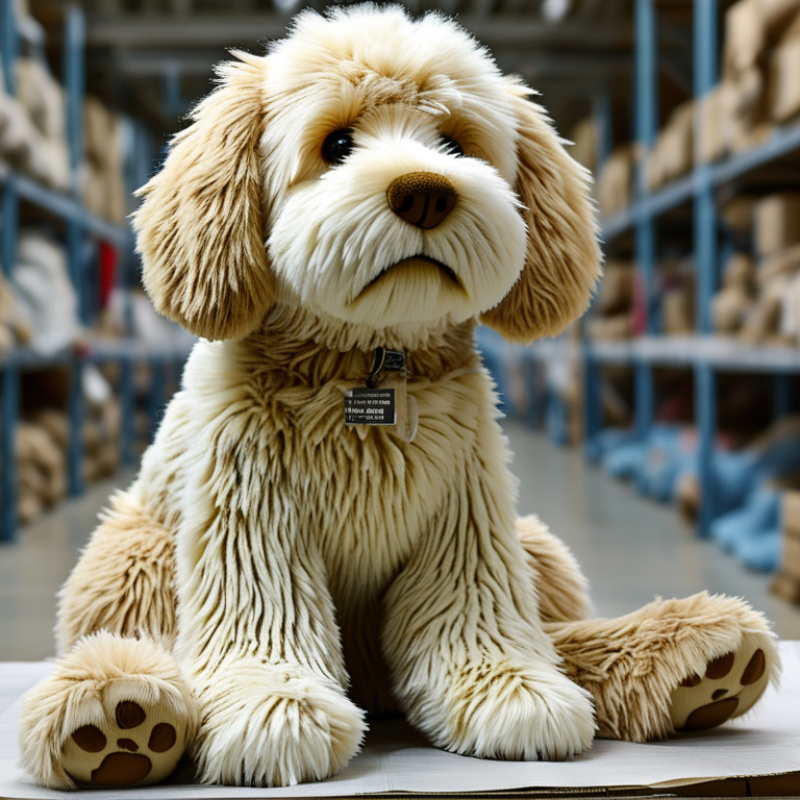
How to Source a Huge Stuffed Dog Wholesale in 2026?

Define Product Specifications for Huge Stuffed Dogs

Before sourcing a huge stuffed dog wholesale in 2026, define the product precisely. “Huge” should include clear measurements, such as 120 centimeters standing height and 80 centimeters body length. Record the size when fully stuffed, not when compressed for shipping. Specify the fabric, pile length, color tolerance, and acceptable stitching variation.

Choose soft, durable materials with a consistent hand feel. A sample should have secure seams, evenly distributed filling, and a stable shape after repeated handling. Request details about the outer fabric composition, filling density, zipper placement, and care instructions. If the toy is intended for children, confirm that the supplier can provide appropriate testing documents for the target market. Avoid relying on verbal promises.

My early specifications were too vague. I accepted “premium plush” without defining softness or seam strength. That caused inconsistent samples. A better specification sheet includes reference photos, measured dimensions, weight tolerance, color standards, carton size, and compression limits. Keep the head upright. Check the nose attachment closely. It is easy to overlook.

Ask for a pre-production sample before approving bulk manufacturing. Test sitting stability, fabric recovery, odor, loose threads, and package deformation. Measure several finished units, not just one. A small defect may become expensive across hundreds of pieces. Leave room for practical adjustments, because oversized plush products rarely match drawings perfectly in their first sample.

Evaluate Wholesale Suppliers and Manufacturing Capabilities

How to Source a Huge Stuffed Dog Wholesale in 2026?

A reliable supplier should prove more than a low unit price. Request a physical sample before discussing large orders. Check the fabric’s softness, seam strength, filling evenness, and odor. Measure the finished dog after packing, because oversized products can shrink or lose shape. Ask for production photos, factory details, quality-control procedures, and recent testing documents. These records should match the exact materials and construction used in your sample.

Tips: Compare at least three suppliers using the same specification sheet. Ask about minimum order quantities, sample fees, production capacity, packaging limits, and replacement policies. A capable manufacturer should explain its monthly output clearly. Request a video inspection of cutting, sewing, stuffing, and final inspection areas. Vague answers are warning signs. Very cheap quotes deserve extra questions.

Large plush toys require stronger construction than ordinary soft toys. Confirm reinforced seams, secure facial features, washable materials, and safe filling. Discuss carton dimensions early. A huge stuffed dog may look profitable until storage and shipping costs rise. I would also test a second sample after revisions. The first sample can hide small flaws. No supplier is perfect. Your evaluation process should allow honest corrections before production. Keep written approval for colors, measurements, labels, packaging, and acceptable defects. This protects both sides and makes quality easier to verify.

How to Source a Huge Stuffed Dog Wholesale in 2026? - Evaluate Wholesale Suppliers and Manufacturing Capabilities
Supplier Profile Typical Product Size Indicative FOB Price
per Unit
Typical MOQ Sample Lead Time Bulk Lead Time Estimated Monthly Capacity Customization Capability Required Compliance Evidence Best Use Case Evaluation Score
Profile A: Small-Batch Custom Workshop 100–140 cm; approximately 1.8–3.5 kg US$28–52 100–300 units 7–12 days 25–40 days 1,000–3,000 units High: custom fabric, embroidery, colors, labels and packaging Third-party testing to ASTM F963, CPSIA or EN 71, plus material and filling declarations Testing new designs and limited retail launches 4.1 / 5
Profile B: Mid-Scale Plush Factory 120–180 cm; approximately 2.5–5.5 kg US$24–46 500–1,000 units 10–15 days 30–50 days 5,000–15,000 units High: pattern development, embroidered details, hangtags and carton design Current laboratory reports, flammability results, seam-strength checks and restricted-substance documentation Regular wholesale orders with moderate customization 4.6 / 5
Profile C: High-Volume Export Factory 100–160 cm; approximately 2–4.5 kg US$18–35 2,000–5,000 units 12–18 days 40–65 days 20,000–60,000 units Medium to high; strongest for approved designs and repeat orders Batch-specific inspection records, product safety reports and documented quality-control procedures Large retail programs and seasonal promotions 4.3 / 5
Profile D: Premium Handmade Producer 90–150 cm; approximately 2–4 kg US$42–85 50–200 units 10–20 days 35–60 days 500–2,000 units Very high; detailed facial features, premium fabrics and complex accessories Applicable toy-safety testing, fiber-content records, dye safety information and production inspection Premium gifting, boutique retail and collector-oriented products 4.0 / 5
Profile E: Recycled-Material Specialist 100–160 cm; approximately 2–4.5 kg US$30–60 500–1,500 units 12–18 days 35–55 days 3,000–12,000 units High; recycled polyester fabrics, paper packaging and sustainability labels Recycled-content evidence, chemical testing, toy-safety reports and packaging material declarations Sustainability-focused retail and environmentally positioned collections 4.2 / 5
Profile F: Private-Label Program Supplier 110–180 cm; approximately 2.5–6 kg US$26–50 1,000–3,000 units 10–16 days 35–60 days 8,000–30,000 units High: packaging, labels, product assortment and production scheduling Pre-production approval sample, final inspection, laboratory reports and traceable batch records Multi-SKU wholesale programs and long-term purchasing contracts 4.7 / 5
Benchmark note: Price, MOQ, capacity and lead-time figures are indicative wholesale ranges for 2026 planning and vary by materials, order quantity, destination, packaging, testing scope and shipping terms. Before placing an order, request a production sample, verify recent third-party test reports, confirm the applicable market standard, and conduct a pre-shipment inspection.

Compare Pricing, Minimum Orders, and Customization Options

How to Source a Huge Stuffed Dog Wholesale in 2026?

Pricing changes sharply with size. A 60–100 cm stuffed dog may cost $8–$18 wholesale. A 100–150 cm version can reach $18–$45. These are working quote ranges, not fixed market averages. Freight volume, fill weight, fabric quality, and packaging can change the final cost. Circana reported that U.S. toy sales declined 1% in 2023, while average selling prices increased 1%. Buyers should protect margins carefully.

Minimum orders usually depend on production complexity. Stock designs may start at 50–100 pieces. Custom colors, embroidery, fabric, or logos often require 300–1,000 pieces. A custom mold or unusual body shape may require more. Grand View Research’s 2024 plush toys analysis forecasts approximately 5% annual market growth through 2030. Demand is growing, but oversized products remain expensive to store. My first cost estimate is often too optimistic. Carton size usually exposes the mistake.

Tips: Request one physical sample before placing a bulk order. Measure its height, sitting width, and compressed carton volume. Ask for a separate quote for 100, 300, and 1,000 units. Compare unit price, sample fees, packaging, and shipping together. Check seam strength, filling recovery, colorfastness, and embroidery accuracy. A lower MOQ may look attractive, but it can increase the unit price considerably.

Verify Safety Standards, Samples, and Quality Control

How to Source a Huge Stuffed Dog Wholesale in 2026?

A huge stuffed dog needs more than a soft surface and attractive stitching. Ask suppliers for material declarations, factory test records, and destination-market compliance documents. Confirm testing against relevant requirements, such as ASTM F963, EN 71, or ISO 8124. Do not accept a generic “safe” statement. The U.S. Consumer Product Safety Commission reported about 231,000 toy-related emergency-room injuries in 2023. Size does not reduce risk.

Check every sample by hand. Pull the eyes, nose, ears, and tail firmly. Inspect seams around the neck and legs, where stuffing pressure is higher. Open the filling area only under controlled conditions. Look for loose fibers, sharp fasteners, odor, color transfer, and poorly secured labels. A third-party laboratory accredited to ISO/IEC 17025 should test flammability, seam strength, stuffing access, and small-part risks. Keep the approved sample sealed and signed.

Production control must be measurable. Require pre-production, mid-production, and final inspections, with photos and carton records. Use an agreed AQL plan rather than vague quality language. The European Commission’s 2023 Safety Gate report recorded 3,412 product alerts, with toys accounting for 13%. That is a useful warning. I would also repeat testing after fabric, filling, or packaging changes. Suppliers sometimes treat a passed sample as permanent approval. It is not. A giant plush can hide small failures.

Plan Shipping, Import Requirements, and Inventory Management

How to Source a Huge Stuffed Dog Wholesale in 2026?

A huge stuffed dog is a logistics project, not merely a toy purchase. My first quote request focused on unit price. That was a mistake. Its soft body consumes container space, while dimensional weight can increase airfreight charges. UNCTAD’s Review of Maritime Transport 2024 reports that over 80% of global merchandise trade by volume moves by sea. Request carton dimensions, gross weight, cubic meters, pallet limits, and loading photos. Compare FOB pricing with delivered-cost estimates, including freight, insurance, duties, port fees, and final-mile delivery.

Before payment, verify import requirements in the destination market. For United States shipments, confirm applicable toy safety rules, testing, tracking labels, and certificates with the relevant regulator. Other markets may require different documentation. Ask the supplier for material composition, age grading, test reports from accredited laboratories, and packaging declarations. Confirm whether stuffing materials need special identification. Do not rely on verbal promises. Paperwork can fail when product details change.

Inventory needs a cautious trial. The National Retail Federation and Appriss Retail estimated that U.S. retailers faced approximately 16.9% returns in 2024, worth about 890 billion dollars. That figure covers all retail, not plush toys, but it shows why oversized products deserve return planning. Start with a small shipment, then track weekly sell-through, carton damage, storage space, and return reasons. Keep replacement units separate from saleable stock. My forecasts are often too confident; seasonal demand can shift quickly. A spreadsheet is useful, but real warehouse observations matter more.

How to Source a Huge Stuffed Dog Wholesale in 2026?

Use this planning model to estimate the time needed for product approval, production, ocean shipping, import clearance, and warehouse receiving. Actual timing varies by supplier, destination, season, and customs requirements.

Planning insight: A realistic end-to-end schedule is approximately 75 days, excluding unexpected customs inspections, port congestion, or product-compliance rework. Build safety stock before the first replenishment cycle begins.

FAQS

: How can I evaluate a wholesale supplier for oversized stuffed dogs?

: Request a physical sample before placing a bulk order. Check fabric softness, seam strength, filling distribution, odor, and shape recovery. Ask for factory details, production photos, quality procedures, and recent testing documents. The documents should match the sample materials. Vague answers are warning signs. No supplier is perfect.

What should I inspect on a physical sample?

Measure height, sitting width, packed size, and compressed carton volume. Check reinforced seams, secure facial features, washable fabric, and safe filling. Look for uneven stuffing or loose threads. Test whether the toy regains its shape after compression. Measure twice.

What wholesale prices should I expect?

A 60–100 centimeter stuffed dog may cost about 8–18 dollars wholesale. A 100–150 centimeter version may cost about 18–45 dollars. These are working ranges, not guaranteed prices. Freight volume, fabric quality, filling weight, and packaging can change the total. The cheapest quote may hide expensive shipping.

What minimum order quantities are common?

Stock designs may begin at 50–100 pieces. Custom colors, embroidery, or fabric may require 300–1,000 pieces. Unusual shapes can require higher quantities. Ask for quotes at 100, 300, and 1,000 units. A lower minimum order may raise the unit cost sharply.

Which customization details should I confirm?

Write down colors, measurements, facial details, labels, packaging, and acceptable defects. Confirm embroidery accuracy and fabric colorfastness. Request a second sample after revisions. The first sample can hide small flaws. Keep written approval.

How can I estimate shipping and landed costs?

Request carton dimensions, gross weight, cubic meters, pallet limits, and loading photos. Compare factory pricing with delivered-cost estimates. Include freight, insurance, duties, port fees, and final delivery. Oversized soft toys consume storage space. Dimensional weight can increase airfreight charges. Carton size changed my estimate.

What import documents should I request?

Ask for material composition, age grading, laboratory test reports, and packaging declarations. Confirm applicable toy safety rules in the destination market. Check tracking-label and certificate requirements before payment. Different markets may request different documents. Do not rely on verbal promises. Paperwork matters.

How should I manage inventory for a large stuffed dog?

Start with a small shipment and track weekly sales. Record carton damage, storage space, return reasons, and replacement needs. Keep replacement units separate from saleable stock. Oversized products need careful return planning. Seasonal demand may shift quickly. Start small.

Conclusion

Sourcing a Huge Stuffed Dog wholesale in 2026 requires a clear plan from product design to inventory arrival. Begin by defining the dog’s size, materials, filling, colors, appearance, packaging, and intended customer group. Next, assess potential wholesale suppliers by reviewing their manufacturing capacity, experience with oversized plush products, production timelines, communication, and ability to support customized designs. Compare unit prices, minimum order quantities, sample fees, payment terms, and customization costs to identify the best balance between quality and budget.

Before placing a bulk order, request samples and confirm product measurements, stitching strength, softness, filling consistency, labeling, and packaging quality. Suppliers should provide reliable safety documentation and maintain consistent quality inspections throughout production. Finally, calculate shipping volume, freight costs, import requirements, warehouse space, and expected sales demand. Careful inventory planning can reduce storage pressure, avoid delays, and help ensure that each Huge Stuffed Dog arrives safely and is ready for wholesale distribution.


Isabella

Isabella

Isabella is a dedicated marketing professional with a sharp focus on driving brand growth and engagement through strategic content creation. With an extensive background in digital marketing, she combines her passion for storytelling with her keen understanding of industry trends to deliver......