Choosing a Giant Dog Toy Plush in 2026 is about more than finding the biggest, softest toy on the shelf. Large dogs can pull seams apart, expose stuffing, or swallow loose pieces during enthusiastic play. A plush toy that looks sturdy in a product photo may not last through a real game of tug. Supervision and regular checks matter.
The American Pet Products Association’s 2025 State of the Industry report estimated U.S. pet-industry spending at $152 billion in 2024, with further growth projected for 2025. That figure covers the wider pet market, not plush toys alone, so it cannot tell us which toy performs best. It does show why buyers deserve clear product details, realistic durability claims, and practical safety guidance. A sales ranking is not a safety test.
Veterinarian Dr. Jennifer Coates has written about selecting appropriate toys and monitoring dogs during play. In paraphrase, her guidance supports a simple rule: match the toy to the individual dog, and supervise use. Not every giant plush suits every dog. A gentle retriever and a determined chewer may treat the same toy very differently. This guide compares size, construction, play style, and care needs, while recognizing one limitation: no plush toy is indestructible. Check stitching, remove damaged toys, and choose the dog in front of you—not just the label.
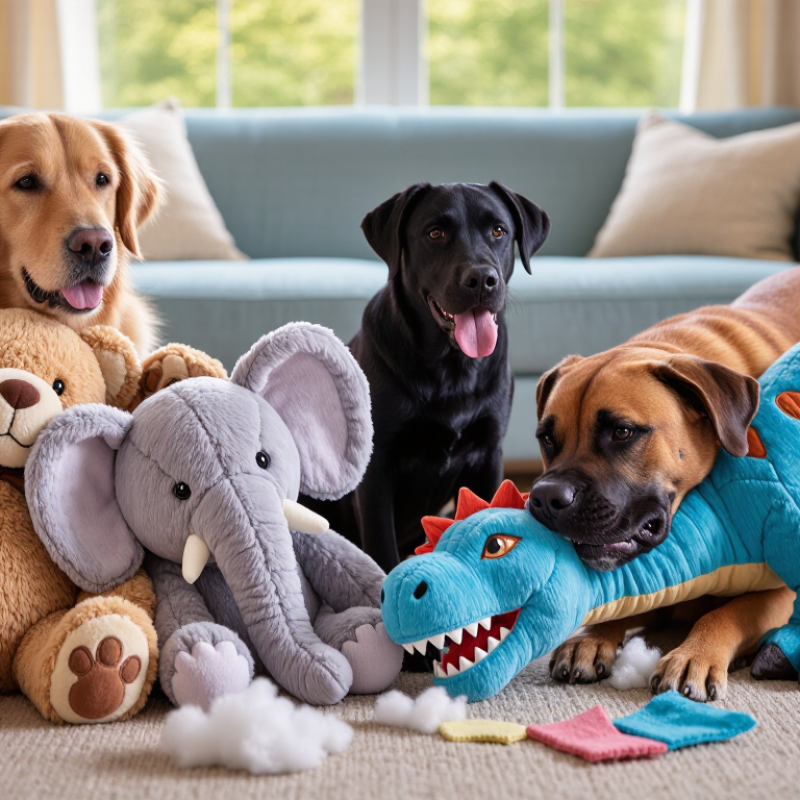
A giant plush dog toy is defined less by its label than by how it fits the dog using it. For a large dog, it should be big enough to grab without vanishing fully into the mouth. A 24-inch toy may suit one dog, while a broad-headed dog may need a different shape. Measure your dog’s muzzle and compare it with the toy’s body and limbs. The fit matters.
Construction matters too. Look for reinforced seams, securely attached details, and fabric that feels sturdy without being rough on the mouth. Plush toys still have limits; determined chewers can tear even thick fabric. Check the toy during play and remove it if stuffing or small parts become exposed. I may be overthinking one loose thread, but it can be a useful warning to inspect the seam.
Tips: Match the toy to your dog’s play style, not just its size. Choose a simple design if your dog pulls at ears or tails. Supervise early play, and check seams regularly. A giant toy can encourage carrying and gentle tugging, but it is not indestructible.
For a large dog, a giant plush toy should be big enough to grab without swallowing or carrying awkwardly. Compare its dimensions with your dog’s favorite toys, not just its weight. A broad body may suit a dog that likes dragging toys across the floor, while a long shape can be easier to grip during gentle tugging. Fit matters. Even a very large toy can feel flimsy if its limbs are narrow or loosely attached.
Construction affects how long the toy stays in play. Dense outer fabric, tidy seams, and securely attached parts can handle ordinary tossing and carrying better than thin cloth and exposed stitching. Check stress points, especially around the neck, paws, and seams. Soft filling adds cushioning, but it may spill out if the shell tears. Not indestructible. Plush toys are not suitable for every chewing style.
Watch how your dog uses the toy during the first few play sessions. A dog that mouths gently may enjoy a stuffed design, while a determined chewer can damage plush fabric quickly. Supervise play and remove the toy if seams open or pieces come loose. I’ve found that size alone can be misleading; stitching and your dog’s habits matter just as much. A quick inspection after play is easy to forget, but it can reveal damage early.
For 2026, giant plush toys for large dogs come in familiar shapes, from oversized animals to long-bodied tug toys. Common outer materials include fleece, plush polyester, and tougher woven fabric. Fleece feels soft against a dog’s mouth, while tightly woven panels may resist light scratching better. Neither fabric makes a toy indestructible. Feel the seams.
Inside, toys may use polyester fiberfill, crinkle material, or a squeaker. Less stuffing can mean less mess if a seam opens, but some dogs prefer a fuller, cuddlier toy. Squeakers add sound and interest; they can also become a choking hazard if exposed. Check the toy during play, especially after enthusiastic chewing.
Design details affect how a toy works. Knotted limbs and broad bodies can give dogs easy places to grip, while flat plush shapes suit gentle carrying. Reinforced stitching is useful, but it is not a guarantee. A toy that looks rugged may still split at a stressed seam. Match its size to your dog, supervise early play, and remove it if stuffing or small parts become accessible. Some dogs are surprisingly careful. Others are not.
Choosing a plush toy for a large dog starts with the dog, not the toy’s label. Check its length against your dog’s muzzle and body. The toy should be easy to grip without forcing the jaw wide. A piece that is too small may be swallowed, while an oversized one can be awkward to carry. Sizing is not exact; dogs vary. Look for reinforced seams and tightly secured features, since vigorous shaking puts stress on stitching. Avoid loose buttons, plastic eyes, or parts that could come off. A soft surface matters, but construction matters more.
Think about how your dog plays. A gentle carrier may enjoy a lightweight plush toy, while a strong chewer needs close supervision and a sturdier option. No plush toy is indestructible. Check it before and after play, especially around seams and squeakers, and remove it if stuffing or small parts become exposed. Follow the care instructions so the toy can be cleaned without damaging its fabric. It is tempting to choose the biggest toy available, but that can make carrying awkward. I would prioritize a secure grip and durable stitching over sheer size; still, each dog’s play style can surprise you.
A giant plush toy should be sized for the dog’s mouth and play style, not just its body. Check seams, eyes, and stitched details before play, then supervise dogs that shake, tug, or chew hard. Remove the toy if stuffing becomes reachable or fabric starts tearing. A soft toy is not indestructible. The APPA 2023–2024 National Pet Owners Survey estimated that 65.1 million U.S. households own dogs; it does not track toy injuries, but it shows how many homes need practical toy-care habits.
For cleaning, follow the care label, use mild detergent, and rinse thoroughly. Make sure the toy is completely dry, including thick seams, before returning it to the dog. Damp stuffing can smell musty, and trapped moisture is easy to miss. Inspect the toy after washing and after rough play. Replace it when stitching cannot be repaired securely, stuffing leaks, or hard parts become loose. A missed seam can happen; set a simple reminder to check the toy weekly, especially after energetic play. Keep damaged plush toys out of reach.
| Topic | Practical guidance | What to check or do |
|---|---|---|
| Choosing a size | Choose a toy your dog can carry and play with comfortably. “Giant” is a general product description, not a standardized safety size. Avoid toys with parts that could fit fully into your dog’s mouth or be swallowed. | Compare the toy with your dog’s mouth and play style; check all sewn-on parts before use. |
| Supervised play | Supervise play, especially the first sessions. Plush toys can be torn open, and stuffing, squeakers, fabric, or other parts can pose a choking or ingestion risk if removed. | Take the toy away if your dog begins ripping, chewing off, or swallowing pieces. |
| Matching play style | A plush toy may suit gentle carrying or supervised play, but it may not last with dogs that aggressively chew or shred toys. No plush toy is indestructible. | Choose a different toy type if your dog regularly destroys plush toys. |
| Pre-play inspection | Check the fabric, seams, stitching, and attached features before each play session. Wear can develop with use, washing, or vigorous chewing. | Look for loose threads, holes, split seams, detached parts, or exposed filling. |
| Cleaning frequency | Clean the toy when it is visibly dirty or has an odor, and follow its care label. There is no single cleaning interval that suits every dog or toy. | Check the label for machine-wash or hand-wash instructions before cleaning. |
| Washing and drying | Use only a cleaning method permitted by the care instructions. Rinse away detergent residue when applicable and let the toy dry completely before returning it to your dog. | Do not use bleach or other harsh cleaners unless the care label specifically allows them. Check seams again after washing. |
| When to replace | Replace the toy when damage makes it unsafe or it cannot be cleaned and dried properly. Replacement timing depends on the toy’s condition and the dog’s use, not a fixed calendar schedule. | Discard it if stuffing or a squeaker is exposed, seams are opening, pieces are detaching, or there is persistent mold or odor. |
| If a piece is swallowed | Swallowed fabric, stuffing, or toy parts may require veterinary advice. Risk depends on the piece and the dog; do not assume it will pass safely. | Contact a veterinarian promptly if you suspect ingestion, particularly if your dog is unwell. |
Safety note: These are general care guidelines. Follow the toy’s care label and seek veterinary advice when a dog may have swallowed part of a toy.
Compare it with your dog’s muzzle and favorite toys. It should be easy to grip without forcing the jaw wide. Too big can be awkward.
A broad body may suit dogs that drag toys across the floor. Long shapes can offer an easier grip for gentle tugging. Preferences vary.
Look for dense fabric, tidy seams, and securely attached parts. Inspect the neck, paws, and other stress points. Seams matter.
Not always. Determined chewing can split fabric quickly, even when a toy looks rugged. Supervise play and remove damaged toys.
Outer fabrics may include fleece, plush polyester, or woven fabric. Fillings can include fiberfill or crinkle material. Feel the seams.
Squeakers may interest dogs, but exposed pieces can become a hazard. Avoid loose buttons or plastic eyes. Check during play.
Check it before and after play, especially around seams and squeakers. I sometimes forget the quick check. It can catch damage early.
Consider your dog’s habits. Gentle carriers may enjoy lightweight plush, while strong chewers need close supervision. No plush toy is indestructible.
A Giant Dog Toy Plush is designed to give large dogs a soft, engaging play option, but its size alone does not determine whether it is suitable. The toy’s proportions, seams, stuffing, and overall construction affect how comfortably a dog can carry, cuddle, tug, or toss it—and how well it holds up to everyday play. Plush fabrics, reinforced stitching, squeakers, crinkle layers, and different shapes can offer varied textures and activities, though features should match the dog’s play style and chewing habits.
When choosing a plush toy, look for a size that is easy for your dog to handle and materials that feel sturdy without being cumbersome. Check seams and small components regularly, supervise play when needed, and remove the toy if it becomes torn or damaged. Follow care instructions to clean it, allow it to dry fully, and inspect it again before use. Replacing a worn toy helps keep play comfortable and appropriate as your dog’s needs change.

D King