10 Best Giant Dog Toys for Large Dogs

Time:2026-11-10 Author:Henry
0%

A giant dog can turn a flimsy toy into loose scraps in minutes. That is why choosing Giant Dog Toys takes more than picking the biggest shape on the shelf. A useful toy should match a dog’s jaw strength, chewing habits, and preferred way to play. Fit comes first.

This guide compares ten options for large dogs, from sturdy chew toys to oversized fetch favorites. We look at size, materials, grip, cleaning, and whether each design suits supervised chewing or interactive games. A ball that looks huge online may still feel awkward in a dog’s mouth. A rope toy may invite tugging, but frayed strands need prompt attention. Small details matter.

No toy is truly indestructible, even when its packaging suggests otherwise. Dogs vary, and chewing intensity can change with age, excitement, or boredom. Follow the maker’s guidance, choose a size your dog cannot swallow, and check toys regularly for splits or missing pieces. Stay nearby during play. If a toy becomes damaged, take it away rather than waiting for the next session. These picks can help owners compare practical features before buying, but they cannot promise a perfect match for every dog. Your dog decides. A careful choice can make play more engaging and give large dogs a safer outlet for their energy.
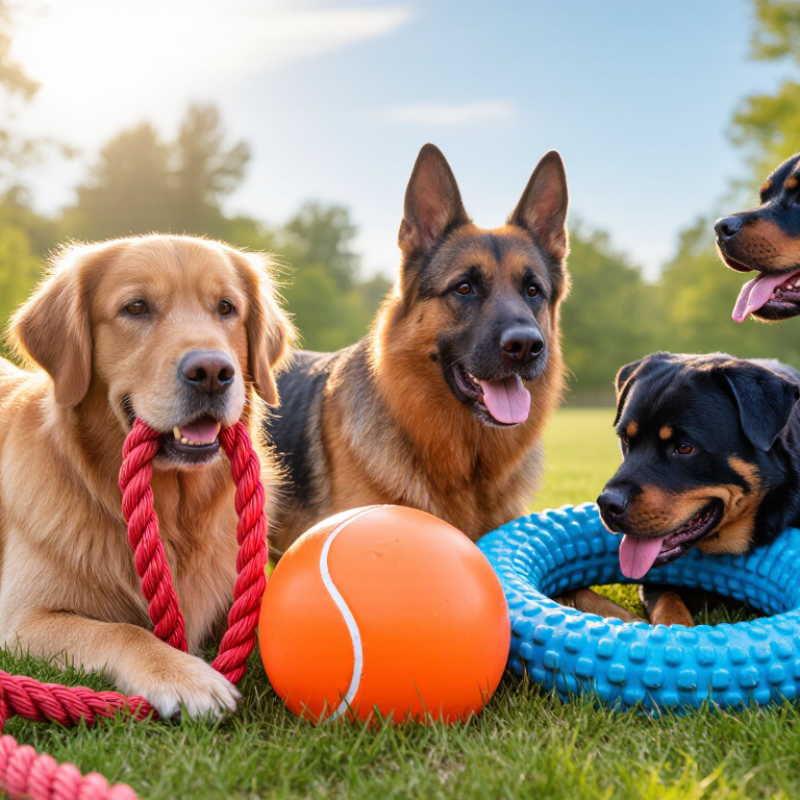
10 Best Giant Dog Toys for Large Dogs

What Defines a Giant Dog Toy for Large Breeds?

A giant dog toy is defined by more than its length. It must suit a large dog’s mouth, jaw strength, and play style. A ball should be too large to swallow, yet small enough for the dog to pick up without straining. Measure your dog’s muzzle and compare it with the toy’s dimensions; weight matters, too. A dense rubber toy can be tiring for an older dog.

Construction matters. Look for thick, firmly joined materials with no small parts that can loosen during chewing. For tug toys, check the stitching and handle before play. For chew toys, choose a shape that does not trap the lower jaw. No toy is indestructible. Even sturdy materials can split, and a cracked surface may expose pieces a dog could swallow.

There is no perfect size for every “giant” breed. A gentle Great Dane and a determined mastiff may treat the same toy very differently. Watch your dog use a new toy, especially during the first few sessions. Remove it if pieces break off, seams open, or the toy becomes small enough to fit fully in the mouth. That inspection can feel fussy, but it is easy to skip when play gets exciting.

How to Choose Toys for Size, Strength, and Play Style

A giant dog needs more than an oversized version of a small toy. Match the toy to the dog’s mouth, chewing force, and favorite way to play. The American Pet Products Association’s 2023–2024 National Pet Owners Survey estimated that 65.1 million U.S. households owned dogs. Its 2024 State of the Industry report put U.S. pet spending at $150.6 billion in 2023. These figures show a large market, not proof that any toy is safe or durable. That distinction matters.

Check the fit. A ball should be too large to swallow, yet small enough for comfortable carrying. For powerful chewers, look for one-piece construction and inspect seams, edges, and handles after each session. No toy is indestructible. For fetch, choose a visible toy that is easy to pick up from grass; for tug, use a long handle that keeps hands away from teeth. A soft plush toy may suit a gentle carrier, but it can fail quickly under determined chewing. I still find “heavy-duty” labels vague, so judge the actual material and your dog’s habits. Replace toys with cracks, loose pieces, or exposed filling, and supervise play when testing a new size or texture.

Main Types of Toys for Giant Dogs

Giant dogs often need toys that can handle strong jaws, broad muzzles, and enthusiastic play. Durable rubber chew toys are a common choice. Look for a size your dog can grip without swallowing or getting it wedged behind the back teeth. A toy should flex slightly, not feel brittle. Not indestructible. Check it after each play session for cracks, deep punctures, or loose pieces, and replace it when damaged. I’ve found that “heavy-duty” does not mean chew-proof; dogs vary, and even a thick toy can wear down quickly.

Tug toys suit dogs that enjoy pulling with a person, but supervise the game and stop if fibers begin coming loose. Oversized balls and soft flying discs work for fetch in open spaces. Choose shapes your dog can pick up easily, then avoid hard throws on slippery floors. Food puzzles add a quieter option: choose one with openings suited to your dog’s muzzle and start with an easy setting. Plush toys may appeal to gentle carriers, though seams can split under rough play. Some dogs surprise you. Match the toy to your dog’s habits, not just its weight.

10 Best Giant Dog Toys for Large Dogs

Choosing a giant dog toy means matching its size and shape to your dog’s play style. A broad rubber toy may suit a powerful chewer, while a large rope toy can invite supervised tugging. For fetch, pick a ball your dog can carry without struggling or swallow. Check seams, handles, and edges before play. Small parts can become hazards if they loosen.

Large dogs can be enthusiastic. A toy that looks indestructible may still split under repeated chewing, so inspect it often and replace it when damaged. I once assumed a heavier toy would last longer; weight alone was not a useful guide. The material, construction, and your dog’s habits matter more. Choose a size that cannot fit fully inside your dog’s mouth, and follow any care instructions provided.

Tips: Match the toy to the activity. Supervise new toys, especially during tug or chewing. Wash toys regularly, and check for cracks, loose fibers, or sharp edges. If your dog loses interest, rotate toys rather than leaving every option out.

Safe Use and Care of Large-Dog Toys

Large-dog toys need more than a tough-looking shell; size, shape, and chewing style matter. Choose a toy too large to swallow, but small enough for your dog to grip comfortably. Check the maker’s use guidance, and avoid toys with loose parts, sharp edges, or brittle sections. Stay nearby. Watch how your dog plays: a gentle carrier and a determined chewer place very different stress on seams and handles. No toy is truly indestructible, even when it feels heavy in your hand. If pieces begin to tear or detach, take the toy away promptly rather than waiting for the next play session.

Inspect toys before and after play, especially around seams, stitched areas, and hollow openings. Replace cracked, frayed, or heavily worn items; swallowed fragments can cause choking or digestive problems. Wash toys according to their material, using mild soap when appropriate, then rinse away residue. Let it dry. Damp toys stored in a closed bin may develop odors or mold, so allow full airflow. Keep different toys for chewing, fetching, and supervised tug, and put away any item your dog guards or chews too aggressively. A quick weekly check is useful, though daily inspection makes more sense for a powerful chewer. Owners sometimes keep a favorite toy too long; sentiment is not a safety test.

FAQS

What makes a toy suitable for a giant dog?

It should fit the dog’s muzzle, jaw strength, and play style. A large size alone is not enough.

How should I choose a ball’s size?

Choose one too large to swallow but small enough to carry comfortably. Check the ball against your dog’s muzzle.

What should I inspect before giving a toy to my dog?

Check seams, handles, edges, and small parts. Remove toys with cracks, loose pieces, or exposed filling. No toy is indestructible.

Which toys work well for powerful chewers?

One-piece rubber toys may suit strong chewers. Look for material that flexes slightly rather than feeling brittle. “Heavy-duty” can be vague.

Are tug toys suitable for giant dogs?

They can suit dogs that enjoy pulling with a person. Check stitching and handles, and stop if fibers come loose.

What should I consider when choosing a fetch toy?

Pick a visible ball or soft disc your dog can lift from grass. Avoid hard throws on slippery floors.

Can giant dogs use food puzzles or plush toys?

Choose puzzle openings that fit your dog’s muzzle, and begin with an easy setting. Plush toys may suit gentle carriers, but seams can split.

How often should I check a new toy?

Watch your dog during the first few sessions, then inspect the toy after play. Some dogs surprise you. Remove it if it becomes small enough to fit fully in the mouth.

Conclusion

Giant Dog Toys are designed to suit the size, strength, and energy of large-breed dogs. The best choices are appropriately sized, sturdy enough for a dog’s chewing habits, and matched to the way the dog likes to play. Some toys encourage chewing, while others are better for fetching, tugging, or interactive play. Considering a dog’s age, activity level, and play style can help owners choose toys that are engaging without being difficult to handle.

This guide explores what makes a toy suitable for a giant dog, how to assess size and durability, and the main types available. It also highlights ten options across different play styles and explains how to use and care for large-dog toys. Regularly checking toys for damage, choosing a suitable size, and replacing worn or broken items can help keep playtime safer and enjoyable.


Henry

Henry

Henry is a dedicated marketing professional with a profound expertise in the company's offerings. With years of experience in the industry, he possesses an impressive understanding of the market dynamics and consumer behaviors that drive success. Henry is committed to sharing his insights through......