Choosing the best Giant Dog Stuffed Animal in 2026 is not simply a matter of picking the tallest plush puppy. A toy that looks enormous online may feel stiff, shed fibers, or overwhelm a small bedroom. Circana reported that U.S. toy sales reached $28.3 billion in 2023, an 8% decline from 2022, in its annual toy-market reporting. That figure offers useful market context, but it does not measure oversized stuffed dogs specifically. That distinction matters.
This guide compares giant dog plush toys through practical details: height, softness, seam quality, stuffing, cleaning instructions, and age guidance. A measuring tape beside the product helps reveal its real scale. Close-up photographs can show whether ears and paws are securely attached, though pictures alone cannot confirm durability. We also consider whether the toy can sit upright, fit through a doorway, and be stored without flattening its shape. Small things. They change daily use.
No single dog plush suits every home. A child may want a floppy cuddle companion, while a collector may prefer lifelike markings and firmer shaping. Buyers should check the manufacturer’s care label and age recommendations, then compare those claims with independent reviews. This is not a laboratory test, and plush quality can vary between batches. The aim is a careful, evidence-aware shortlist—not a promise that one oversized toy will be perfect for everyone.
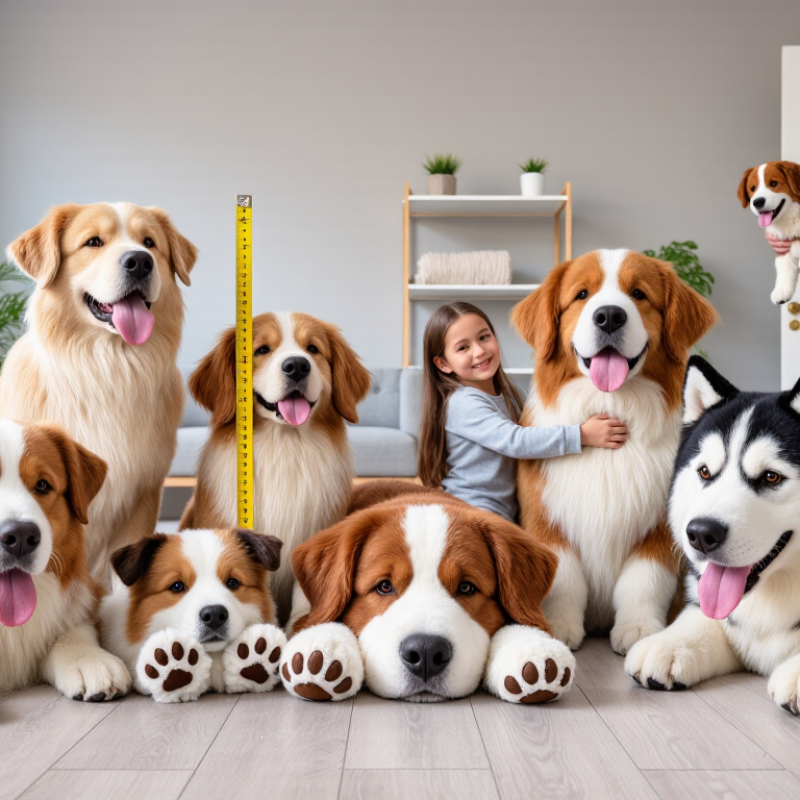
What defines a giant dog stuffed animal in 2026? There is no universal size cutoff, so “giant” is best judged by measurements, not a product label. Check the full height from paws to ears, plus the body width when the toy is sitting. A dog that looks enormous in a small product photo may be much shorter beside a sofa. Measure the intended spot at home before choosing. A tape measure helps.
Size is only part of the answer. A well-made giant plush should hold its shape without feeling stiff, with seams that stay secure during ordinary cuddling. Look for clear care instructions, especially if the toy is too large for a household washing machine. Soft fabric matters, but dense stuffing can make a big dog awkward to lift or reposition. That tradeoff is easy to overlook. Consider who will use it, where it will sit, and whether it can be stored cleanly.
Tips: Compare listed dimensions with a chair or bed you know. Check the toy’s weight and cleaning guidance, too. For a child, review age guidance and small-part warnings. A giant dog should fit the room, not block a walkway. And honestly, the biggest option is not always the most comfortable one.
A practical, brand-neutral guide to size, construction, care, and choosing a giant plush dog. The size bands below are useful shopping guidelines, not regulated industry categories.
| Dimension | Practical benchmark | What to check | Why it matters |
|---|---|---|---|
| Overall size | About 36 inches (91 cm) or longer in at least one stated dimension is a useful working definition of “giant.” | Check whether the listed measurement is length, seated height, or standing height. | “Giant” is a descriptive label rather than a standardized size category, so measurements are more useful than the label alone. |
| Suggested size bands | Large: 24–35 in (61–89 cm); giant: 36–47 in (91–119 cm); extra-large: 48 in (122 cm) or more. | Compare products using the same measurement orientation where possible. | These guide bands make it easier to compare options; brands and sellers may use different size descriptions. |
| How length is measured | Usually from nose to rump or tail, depending on the seller’s method. | Look for a measurement diagram or ask how the toy was measured. | A long, lying-down dog can have a large nose-to-tail measurement but a much shorter seated height. |
| Height and shape | Standing, seated, and lying-down designs can have very different heights even at similar lengths. | Check the product’s pose and the height from the base to the top of the head. | Shape affects how the plush fits beside a bed, on a chair, or in a play area. |
| Outer fabric | Common plush surfaces include polyester fabrics such as fleece or short-pile plush. | Review the fabric description and inspect any available close-up images for texture and stitching. | Fabric type influences feel, appearance, and the care instructions; softness cannot be judged reliably from size alone. |
| Filling and firmness | Most stuffed animals use soft filling; firmness varies by design and how densely the toy is filled. | Check whether the toy is designed to sit upright, lie flat, or function mainly as a cuddle plush. | A very large plush may need a stable shape to sit well, while a softer body may be easier to hug. |
| Seams and attachments | Look for securely sewn seams and firmly attached features such as ears, paws, and facial details. | Inspect stress points and follow the age grading and safety instructions on the item’s label. | Secure construction is especially important when a toy will be handled frequently. |
| Cleaning | Care methods vary; some plush toys are surface-clean only, while others may be machine washable. | Follow the care label rather than assuming a large toy can go in a household washer. | Large toys may not fit in a standard washing machine, and washing instructions differ by materials and construction. |
| Room and storage space | Measure the intended spot, including floor space and nearby furniture clearance. | Allow for the toy’s full shape when seated or lying down, not just its advertised length. | A giant plush can take up substantial space and may need a dedicated storage area. |
| Best choice by use | For cuddling, prioritize a soft body and a manageable shape; for display, prioritize pose and appearance; for a gift, verify the recipient’s available space. | Match the toy’s dimensions, care needs, and age guidance to the person and intended setting. | The “best” giant dog stuffed animal depends on how it will be used, not on size alone. |
Quick takeaway: A giant dog stuffed animal is best defined by its measured dimensions, shape, and intended use—not by a universal size standard. Always check the seller’s measurement method, care label, and age guidance before buying.
Measure the bed, sofa, or reading corner before choosing. Check height and body length. Measure first.
Short, dense plush is often easier to brush. Long pile can feel softer, but may collect lint and crumbs. Check the care label.
Press gently across the body. The filling should feel fairly even, without hard clumps or empty spots. Feel is personal, though.
Inspect the neck, legs, and tail for tight seams. Check that small features are firmly attached. I might be fussy, but tiny gaps can grow.
A soft, easy-to-lift shape with evenly spread stuffing may work well. Floppy legs can rest comfortably beside a pillow.
Follow the age guidance and inspect the toy regularly. Look for loose parts or damaged stitching. Small details matter.
Not necessarily. Check the care instructions and make sure you have room for the toy to dry fully.
Compare its measurements with a sofa cushion or doorway. Read recent reviews about actual size and flattened filling. I still misjudge scale from photos.
Choosing the best Giant Dog Stuffed Animal in 2026 depends on more than its impressive size. A truly giant plush should suit the space where it will be used, feel soft and comfortable, and have sturdy construction that can withstand regular cuddling and play. Compare its dimensions, outer fabric, filling, seams, and overall shape, since these details affect both comfort and durability. Different dog styles also offer distinct looks, from floppy-eared companions to plush designs with upright ears or lifelike markings.
Safety and easy care matter just as much as appearance. Check that small details are securely attached, seams are well finished, and cleaning instructions fit your household’s needs. Consider who will use the plush, how much room is available, and whether it is mainly for decoration, comfort, or play. By balancing size, materials, construction, style, and maintenance, you can find a giant dog plush that feels welcoming and remains a dependable favorite over time.

 D King