2026 Top Handmade Cat Toys for Global Buyers?

Time:2026-10-09 Author:Ethan
0%

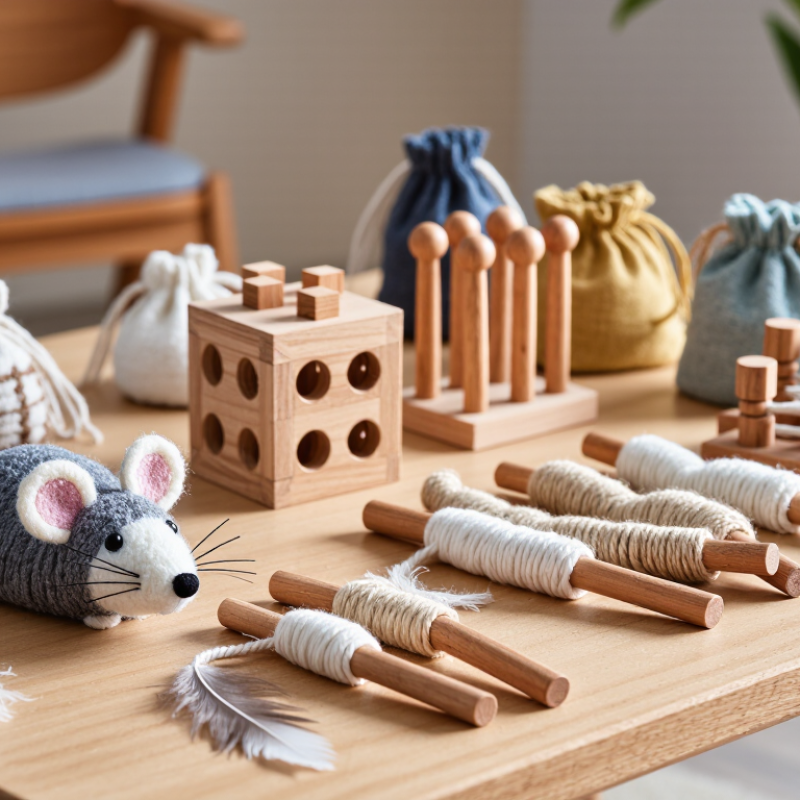
As global buyers prepare for 2026, Handmade Cat Toys are becoming more than charming pet accessories. They reflect careful craftsmanship, local materials, and the growing demand for thoughtful feline enrichment. A small wool mouse, stitched by hand, can encourage chasing, batting, and independent play. Yet appearance alone cannot prove quality.

This guide explores the top handmade options for international retailers, distributors, and responsible pet owners. It considers material safety, stitching strength, washable construction, realistic production capacity, and clear supplier communication. Natural cotton, untreated wood, and securely attached features may support safer play when properly selected. Every toy still requires inspection. Cats can be unpredictable.

Experienced buyers should ask practical questions before placing an order. Are dyes suitable for animal products? Can loose threads be controlled? Does the maker provide consistent dimensions and packaging details? These questions help reduce avoidable risks across different markets. They also reveal whether a workshop has reliable quality procedures or only attractive photographs.

The article will compare interactive toys, catnip designs, puzzle products, and minimalist handmade pieces. It will also examine customization, wholesale readiness, sustainability claims, and buyer expectations in 2026. Some popular styles may look impressive but offer limited enrichment. That deserves honest reflection. Handmade does not automatically mean superior. The strongest choices balance play value, durability, transparency, and responsible production.
2026 Top Handmade Cat Toys for Global Buyers?

2026 Handmade Cat Toy Taxonomy: Materials, Formats, and Enrichment Uses

For global buyers, handmade cat toys in 2026 are easier to assess through taxonomy than trends. Materials shape safety, durability, texture, and cleaning needs. Organic cotton offers a soft surface for batting and carrying. Felt adds structure but may collect loose fur. Untreated wood gives a firm rattle and natural scent. Wool can feel warm, although some cats pull fibers quickly. Recycled paper suits short play cycles. It is not always durable. Buyers should ask about stitching, dye stability, filler type, and detachable parts. These details matter more than decorative appearance.

Formats create different enrichment uses. Wand toys encourage chasing, jumping, and controlled distance. Crinkle shapes support sound-based exploration. Stuffed figures suit biting, kicking, and carrying. Small fabric balls invite batting across hard floors.

Puzzle pockets slow treat-based foraging and reward persistence. Rotating toys can reduce boredom, but constant access may reduce interest. In hands-on checks, reinforced seams and balanced weight often perform better. Cats differ. A confident adult may prefer movement, while a cautious kitten may approach a quiet cloth shape.

Material and format should match the cat’s habits, home layout, and supervision level. Long strings need active supervision. Natural materials can absorb moisture and odors, requiring clear care instructions. Handmade variation is part of the appeal, yet uneven seams should not be excused as character. Not every toy lasts. I still question “eco-friendly” claims without sourcing or durability evidence. A toy that fails after two sessions creates more waste. Small changes matter: washable covers, secure knots, and repairable construction.

Market Evidence: APPA 2024–2025 U.S. Pet Spending and Cat-Buyer Signals

The 2026 handmade cat-toy market should follow evidence, not decoration alone. APPA reported approximately 152 billion dollars in U.S. pet spending during 2024. Its 2025 projection reached about 157 billion dollars. This growth shows resilient demand, but it does not guarantee that every toy will sell.

APPA’s 2024–2025 buyer signals point toward practical pet care and stronger household selectivity. Cat owners may appreciate enrichment, yet they still notice durability, cleanability, and sensible pricing. A successful handmade toy could use tightly stitched cotton, quiet crinkle material, or a simple refillable design. Small details matter. A feather wand should have secure attachments and a comfortable handle. A fabric mouse should survive repeated contact with claws.

Global buyers also need clear product evidence. State dimensions in centimeters and inches. Explain materials, washing limits, and expected use.

Avoid vague claims such as “completely safe” unless testing supports them. Handmade production adds character, but variation must be disclosed.

One toy may have a slightly uneven seam. That is honest, not automatically a weakness.

The market signal is encouraging, though imperfect. U.S. spending data measures economic activity, not guaranteed interest in a specific handmade style. Buyers in different regions may prefer quieter toys, stronger colors, or smaller packaging. I would test several designs with real cat households before ordering large quantities. A beautiful toy that cats ignore is still a failed product.

Global Screening: FEDIAF 2024 Cat-Population Data by European Market

2026 Top Handmade Cat Toys for Global Buyers

Global Screening: FEDIAF 2024 Cat-Population Data by European Market

FEDIAF’s 2024 European Facts and Figures reports about 108.3 million cats across Europe. The report uses 2023 market data, so buyers should avoid treating every figure as current. National differences matter. Germany, France, Italy, Spain, and the United Kingdom show distinct household patterns, product preferences, and retail structures.

For handmade cat toys, population size is only the starting point. A soft linen kicker may suit indoor cats in dense European cities. A compact felt mouse may reduce shipping volume and shelf space. Buyers should inspect stitching, stuffing security, fibre labels, and washable construction. Small loose parts deserve extra caution.

The weak point is obvious.

FEDIAF measures cat populations, not toy demand. The APPA 2024–2025 National Pet Owners Survey adds useful context, reporting 49.5 million U.S. cat-owning households. Yet European purchasing behaviour cannot be copied from American data. I would compare each target market’s cat numbers with local income, apartment living, climate, and ecommerce habits. That screening is imperfect, but more honest than calling one design “global.”

Safety and Compliance: REACH, GPSR, CPSIA, and Material Traceability

2026 Top Handmade Cat Toys for Global Buyers?

Safety and Compliance: REACH, GPSR, CPSIA, and Material Traceability

Handmade cat toys need more than attractive stitching and natural-looking materials. Buyers should ask how fabrics, dyes, fillings, threads, bells, and adhesives were selected. REACH checks chemical restrictions and substances of concern in products entering the European market. A supplier declaration helps, but independent laboratory testing may provide stronger evidence. Keep current test reports.

The GPSR requires safe products, clear manufacturer information, traceable identification, and suitable warnings for EU consumers. Each batch should carry a simple code linked to production dates, material suppliers, and inspection records. Small parts need special attention. Loose bells, feathers, or plastic eyes can create hazards when a cat bites or pulls them. Packaging should not imply safety without evidence.

CPSIA mainly concerns products designed or intended for children in the United States, so sellers must assess marketing, packaging, and product design carefully. A cat toy shown as a children’s play item may receive closer scrutiny. Material traceability should continue from fiber or metal sourcing to final packing. Keep invoices, supplier declarations, colorant details, and corrective-action records. Labels are not proof. Documentation can still be incomplete. That weakness deserves honest review before export. A practical inspection should include seam strength, pull resistance, sharp edges, odor, and durability after repeated use. Safety claims must match the evidence.

Buyer Scorecard: Durability, MOQ, Cost, Customization, and Delivery Risk

For global buyers, handmade cat toys need more than attractive stitching and playful colors. A practical scorecard should rate durability, MOQ, cost, customization, and delivery risk. Check seams by pulling them gently, then inspect loose threads, weak glue points, and detachable decorations. A toy that survives one showroom test may still fail after repeated biting and washing.

Durability deserves the highest weight. Ask for material details, sample photos, and a small trial order. Record the failure point, not only the successful sample. MOQ affects cash flow, especially when each design needs separate fabric or packaging. Compare the unit cost with sampling fees, packaging charges, and freight estimates. Cheap products can become expensive after rework.

Customization should include size, color, printed labels, packaging, and inspection standards. Confirm every detail in writing. Delivery risk needs a realistic production window, buffer days, and a backup shipping plan. Weather, port congestion, and handmade production delays can change the schedule. My earlier buying scorecards focused too heavily on price. That was a mistake.

Tips: Score each supplier from one to five, and keep evidence beside every score. Order samples before committing to volume. Measure toys after washing. Ask how defective pieces are replaced. A clear answer matters. If a supplier avoids basic questions, pause the order.

2026 Top Handmade Cat Toys for Global Buyers? - Buyer Scorecard: Durability, MOQ, Cost, Customization, and Delivery Risk
Handmade Toy Type Typical Materials Expected Durability Indicative Wholesale Cost
(USD / unit)
Typical MOQ Customization Options Typical Production Lead Time Delivery Risk Buyer Suitability
Catnip Fabric Mouse Non-toxic cotton or linen fabric, polyester thread, dried catnip or silvervine 3.5/5
Good for supervised play; seams may wear with aggressive biting
$0.80–$2.20 100–300 units Shape, fabric print, embroidery, hangtag, scent choice, retail packaging 15–30 days Low Entry-level retail, subscription boxes, promotional sets
Hand-Knitted Catnip Ball Cotton yarn, wool-blend yarn, natural catnip or silvervine 3/5
Soft and attractive, but knitted loops can snag or loosen
$1.20–$3.50 50–200 units Color palette, size, stitch pattern, woven label, gift box 20–35 days Medium Gift shops, lifestyle retailers, premium small-batch collections
Felt Ball Track Toy Compressed wool felt, natural dyes, wooden or recycled-paper track components 4/5
Firm construction with moderate resistance to scratching and batting
$2.50–$6.50 100–250 units Ball colors, track shape, logo tag, carton artwork, component count 25–45 days Medium Specialty pet stores and durable-play product lines
Feather Wand Teaser Natural or responsibly sourced feathers, cotton cord, wood or bamboo handle 3/5
High engagement; feather and cord components are consumable
$1.00–$3.80 100–500 units Handle finish, cord length, attachment style, feather mix, header card 15–30 days High Fast-moving retail, but requires safety inspection and supervised-use labeling
Wooden Puzzle Feeder Untreated hardwood or bamboo, water-based finish, removable fabric inserts 4.5/5
Long service life when edges are smooth and finish is pet-safe
$4.50–$12.00 100–300 units Board shape, engraving, difficulty level, insert colors, instruction card 30–55 days Medium Premium enrichment, specialty retailers, educational pet products
Hanging Sisal Scratcher Natural sisal rope, untreated wood, cotton loop, cardboard backing 4/5
Good abrasion resistance; hanging hardware must be securely fixed
$3.00–$8.50 100–250 units Shape, rope color, wood engraving, hanging length, packaging format 25–45 days Medium Home-accessory retailers and sustainability-focused collections
Cork and Fabric Crinkle Toy Natural cork, cotton fabric, crinkle film, reinforced stitching 3.5/5
Lightweight and resilient; internal film should be securely enclosed
$1.50–$4.50 100–300 units Fabric pattern, shape, sound level, printed label, recyclable pouch 20–40 days Medium Eco-conscious brands, online bundles, novelty toy assortments
Organic Cotton Kicker Toy Organic cotton canvas, recycled fiber filling, catnip or silvervine 4/5
Strong option when double-stitched and fitted with reinforced corners
$2.00–$5.50 100–500 units Dimensions, fabric certification, print, filling, woven label, carton design 20–40 days Low High-volume online retail and private-label multipacks
Wool Pom-Pom Bundle Felted wool, cotton cord, natural dye or undyed fiber 3/5
Suitable for batting and chasing; cord attachment needs regular inspection
$0.90–$2.80 100–300 units Bundle quantity, color mix, cord length, branded card, reusable pouch 15–30 days Low Value packs, seasonal displays, impulse-purchase merchandising
Recycled Paper Tunnel Recycled kraft paperboard, soy-based ink, fold-flat construction 3.5/5
Low weight and recyclable; vulnerable to moisture and heavy chewing
$2.00–$5.00 100–500 units Printed graphics, tunnel length, perforations, folding pattern, carton size 20–35 days Low Eco-focused e-commerce, seasonal promotions, flat-pack shipping
Benchmark basis: indicative small-batch wholesale ranges for 2026 planning. Final costs, MOQs, lead times, safety documentation, material certifications, and freight exposure vary by construction, order volume, destination, packaging, and inspection requirements. All toys should be checked for loose parts, sharp edges, insecure strings, and appropriate supervised-use warnings.

FAQS

Which materials are suitable for handmade cat toys?

Organic cotton feels soft for batting and carrying. Untreated wood creates a firm rattle. Felt adds structure but collects loose fur. Recycled paper suits brief play sessions. It may not last long.

What safety details should buyers inspect?

Check stitching, dye stability, filler type, and detachable parts. Pull seams gently before ordering. Loose threads and weak knots need correction. Decorative details are not enough.

Which toy formats provide different enrichment activities?

Wand toys encourage chasing and jumping. Crinkle shapes support sound-based exploration. Stuffed figures suit biting, kicking, and carrying. Puzzle pockets slow treat-based foraging.

Are long strings safe for unsupervised play?

No. Long strings require active supervision. Remove the toy after play ends. Small loose parts also deserve careful attention.

How should buyers match toys with individual cats?

Consider age, confidence, habits, and home layout. A confident adult may enjoy moving toys. A cautious kitten may prefer a quiet cloth shape. Cats differ more than product labels suggest.

How can buyers evaluate durability?

Order samples and inspect reinforced seams. Wash the sample before approval. Record where it fails, not only when it succeeds. Handmade variation is acceptable. Uneven seams should not be excused as character.

What should a practical buying scorecard include?

Rate durability, MOQ, cost, customization, and delivery risk. Use a one-to-five scale. Keep evidence beside every score. I once focused too heavily on price. That was a mistake.

How can buyers reduce delivery and replacement problems?

Confirm specifications in writing. Include sizes, colors, labels, packaging, and inspection standards. Add buffer days to production schedules. Ask how defective pieces are replaced. A clear answer matters.

Conclusion

This guide presents a practical framework for global buyers evaluating Handmade Cat Toys in 2026. It classifies products by materials, formats, and enrichment purposes, including toys designed for chasing, batting, scratching, chewing, and interactive play. The overview also connects recent U.S. pet-spending trends and cat-buyer signals with European cat-population data to help buyers identify promising markets and understand regional demand.

For responsible sourcing, the guide highlights safety and compliance considerations, including REACH, GPSR, CPSIA, and clear material traceability. Buyers can use a structured scorecard to compare durability, minimum order quantities, total cost, customization options, and delivery risk. By combining market evidence, product function, safety documentation, and supplier performance, global purchasers can select Handmade Cat Toys that offer reliable quality, practical enrichment value, and stronger long-term commercial potential.


Ethan

Ethan

Ethan is a seasoned marketing professional with a deep expertise in our company's innovative product line. With a passion for sharing knowledge and insights, he takes the lead in regularly updating our corporate blog, where he explores industry trends, product features, and effective marketing......